


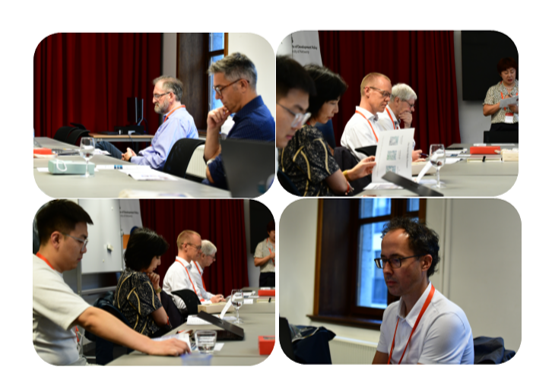
Antwerp, Belgium — September 8, 2026. The 2026 Editorial Board Meeting of the Journal of Data and Information Science (JDIS) was held at the University of Antwerp on September 8, on the eve of the STI Conference (https://www.uantwerpen.be/en/conferences/30th-annual-international-conference-on-science-and-technology-indicators/ ).
The meeting brought together members of the JDIS editorial leadership team, including Professor Liying Yang, Professor Ronald Rousseau, and Professor Johan Bollen, as well as editorial board members from several countries and regions.

Co-Editor-in-Chief Prof. Liying Yang
A key item on the agenda was the transition in the journal’s editorial leadership. At Professor Ronald Rousseau’s request, he will step down as Co-Editor-in-Chief and assume the role of Honorary Editor-in-Chief. Professor Tim Engels will serve as the new Co-Editor-in-Chief. The transition represents both a continuation of the journal’s development and the beginning of a new phase for JDIS.

Co-Editor-in-Chief Prof. Ronald Rousseau
During the meeting, members of the editorial leadership team shared their perspectives on the journal’s future development and exchanged views with editorial board members on its priorities for the coming years.
Against the backdrop of rapid advances in artificial intelligence and profound changes in the research ecosystem, the field of science of science is facing new questions, needs, and challenges. The meeting highlighted the importance of further examining and expanding the objects of study, methodological boundaries, and societal relevance of science-of-science research.
Looking ahead, JDIS will further broaden its scope to address common challenges across the research ecosystem, with particular attention to knowledge production and evolution in interdisciplinary research, research collaboration and team science, research evaluation, and research integrity. The journal will also extend its perspective to the diverse actors involved in the research ecosystem, including research management organizations, researchers, and scholarly publishing organizations, with the aim of developing a more systematic understanding of scientific activity and changes in the broader research ecosystem.
The editorial board meeting marked a new starting point for JDIS as it enters its next stage of development. Building on the expertise and international network of its editorial board, the journal will continue to strengthen engagement and collaboration with scholars and institutions worldwide, further enhance the quality and international visibility of its publications, and serve as an international platform for advancing research on science and the research ecosystem.